Until the end of February our focus was on spending the balance of the £300,000 European/Defra grant before the expiry date. With Christmas and New Year in the middle it proved to be quite a challenge – but we made it with the assistance of some very helpful members of the Defra team. These funds reimburse expenditure on environmental aspects of the build (e.g. detailed design, the natural stone clad retaining wall, fish pass ancillary items, deposits on fish screens, penstocks, and civil works).
Author: halton
-
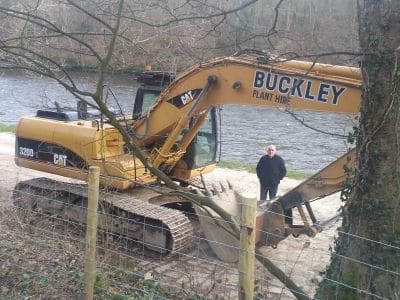
A new digger on site
A new digger has been brought on site to continue excavation through the rock for the fish screen bay, building basement and outfall.
Site work has involved excavation of the old mill race (or leat). Bill Hosfield (a local historian) told us it was filled with high quality stone from local quarries circa 1976. Indeed it was. So the riverside track has been upgraded and we have a large stockpile ready to use as backfill on completion of the build – much cheaper than buying stone in.
Remember it’s a building site and not safe unless you’ve had a site induction, so please keep out. Our apologies for the disruption with the closure of the wooden steps
-

Share Certificates issued to first investors
Everyone who invested more than £500 and who indicated that they wished to qualify for Seed Enterprise Investment Scheme (SEIS) tax relief because they participated in the first £150,000 of investment raised should now have received their share certificates. We now have to spend at least 70% of that money before we can issue any more certificates. We expect to achieve this by placing a deposit on the turbine and paying other expenses incurred in the next couple of weeks.
The 50% tax relief on the capital invested can be claimed for either the current, or the previous tax year. However, we can’t apply to be registered for SEIS until we have spent 70% 0f the amount raised. We will notify eligible investors, who have up to five years to claim the relief, when we are registered. Full details of the SEIS scheme are available here.
All other investors who buy shares for more than £500 are eligible to receive EIS tax relief on 30% of their capital in the tax year they make the investment. Details are available here.
[box type=”warning” ]Various conditions have to be met by the company and by investors so tax relief should not be relied on until both the company and individual applicatiions for SEIS and EIS are approved.[/box]
-
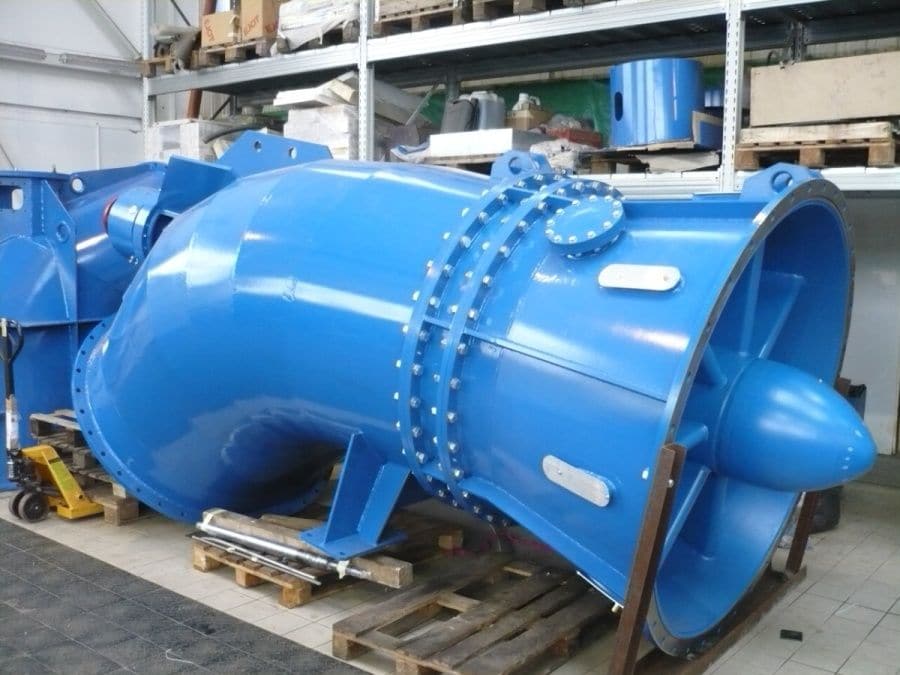
The turbine has been ordered
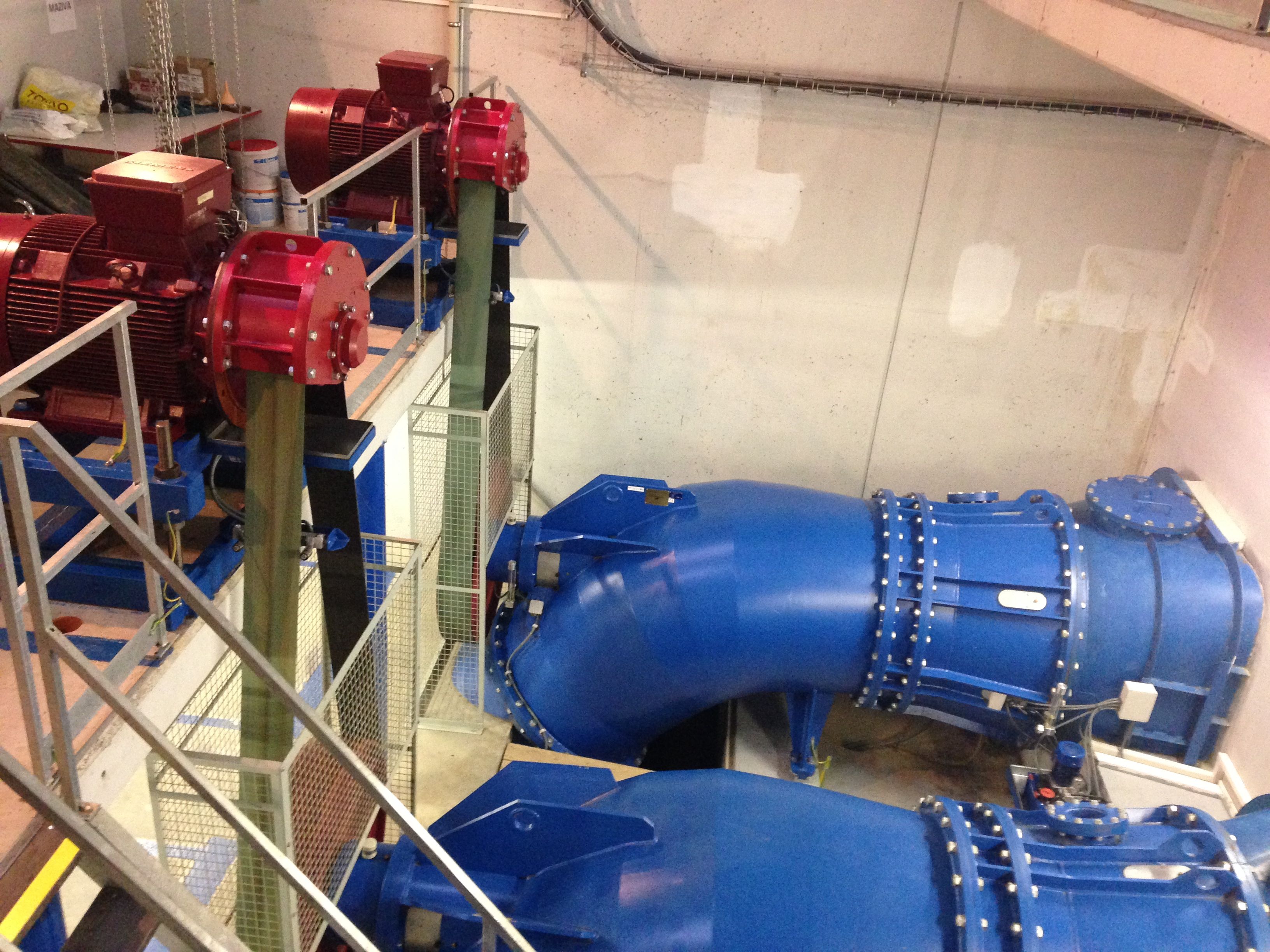
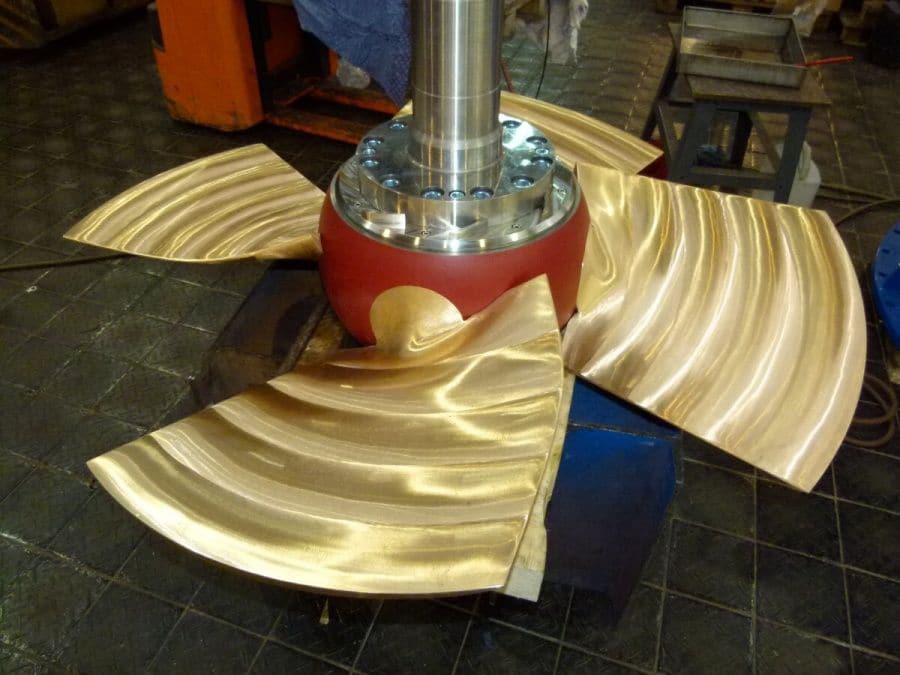
 John and Alan visited the Czech Republic recently to look at the turbines manufactured by Hydrohrom. Unfortunately Gilkes of Kendal no longer manufacture turbines for low head hydro schemes so we were forced to look abroad. Hydrohrom has an impressive track record of low head hydro throughout Europe, and after all the Kaplin turbine was invented at the Czech Technical University in Brno. They came in with a much lower price than anyone else – mostly due to the lower, country specific, manufacturing costs and the fact that virtually all the components are made in-house rather than bought in. John and Alan came back very impressed with the company, the quality of their factory, personnel and products, and we have now placed an order for our turbine, which has a ten month delivery schedule.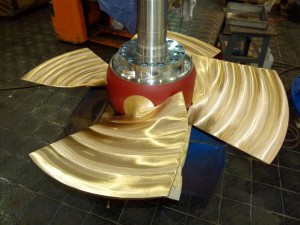
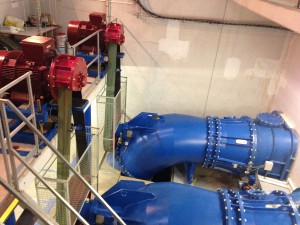
The company have currently got seven turbines in production, so we have seen turbines and installations very similar to ours. Our installation will have provision for two turbines in quite a large “basement” below a small stone cottage that houses electrical equipment above ground
We have also confirmed a price for the second turbine that we plan to install 12 months after the first becomes operational. It will cost £295,000 including extra electrical, project management, and 10% reserve, which is significantly less than we anticipated.
-
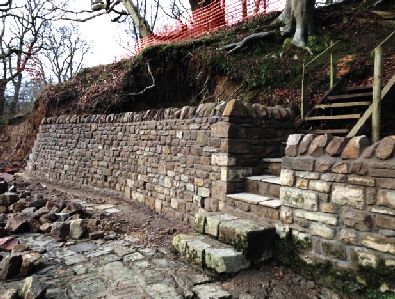
Environmental works funded by Defra
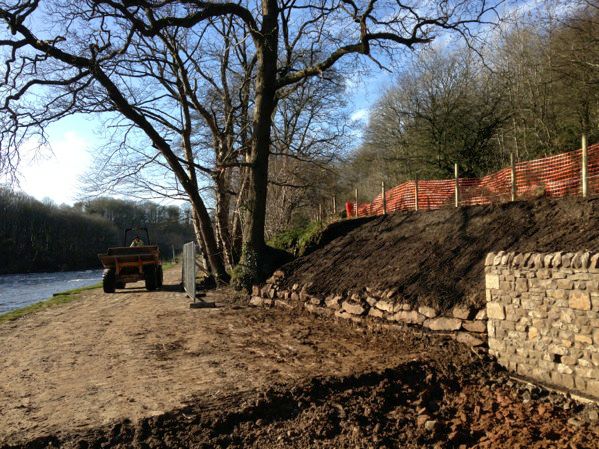
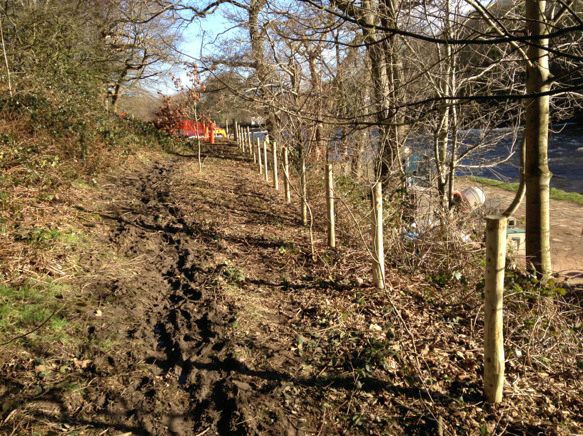
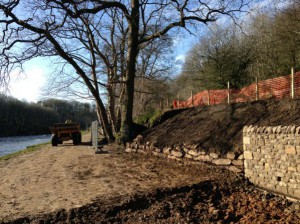 The new retaining wall is now complete, the bank has been infilled, and woodland fencing has been replaced. The work has been completed using Halton Carbon Positive’s Rural Climate Challenge Fund grant from Defra. The funding is for environmental works. Excavation to accommodate the fish pass and fish screens, as well as the basement for the turbines, commences next week.
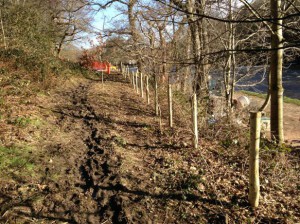 We are on course to spend the full amount of the grant before the deadline at the end of February. This is a fantastic achievement by all concerned, given that work was delayed by a combination of the very wet weather and the late issuing of the final licences and approvals. The new steps look great but unfortunately the footpath will remain diverted until most of the construction work is finished.
 -
Community energy strategy? Our hydropower scheme was on its own
New blog in the Guardian by Alison Cahn on the trials and trubulations of setting up a Community Energy scheme. http://www.theguardian.com/uk-news/the-northerner/2014/jan/28/community-hydropower-energy-strategy-halton-lune
-
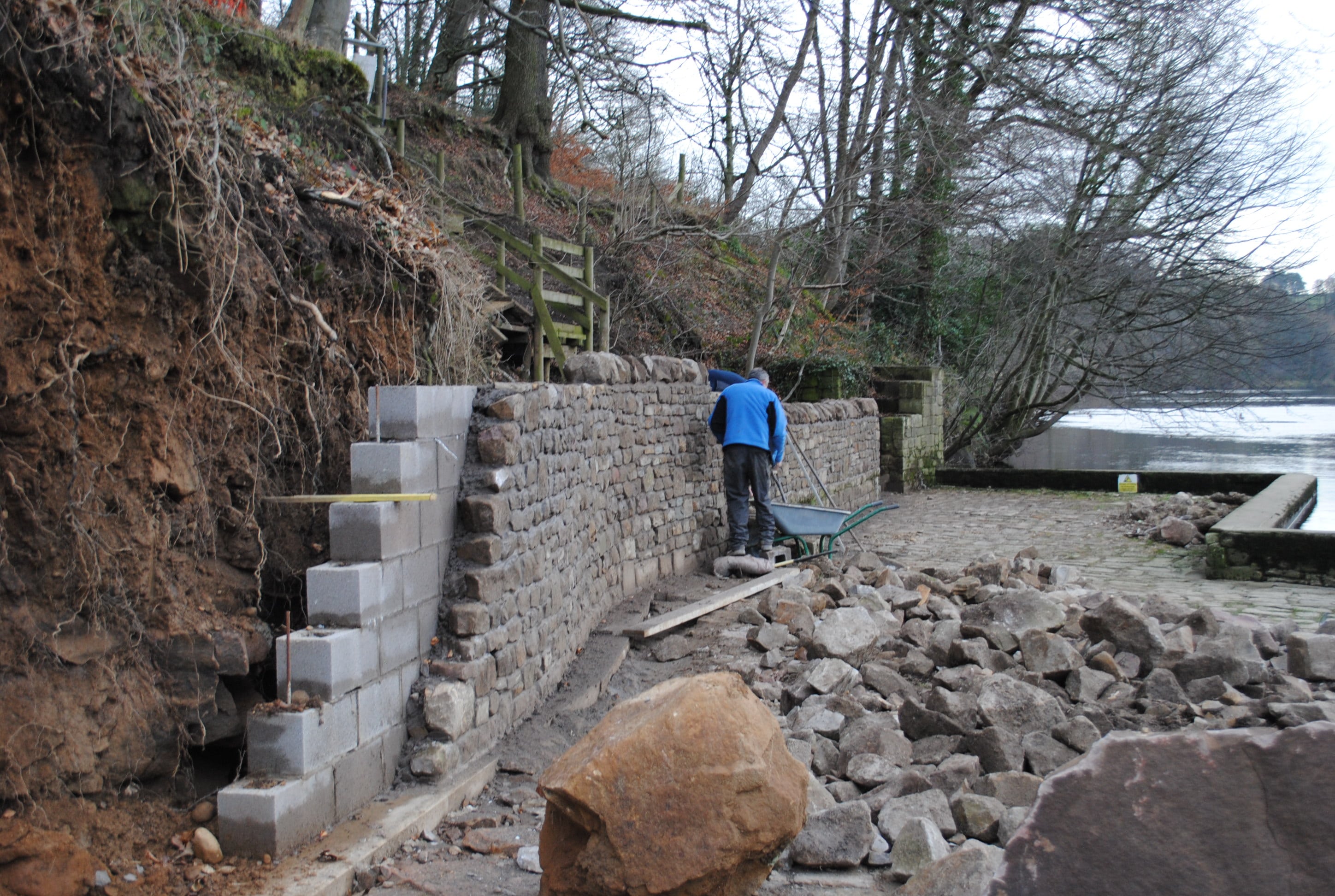
Progress with wall building
The retaining wall that will stop further erosion of the bank every time the river floods is progressing well, and already looks as though it has always been there it blends in so well.
-
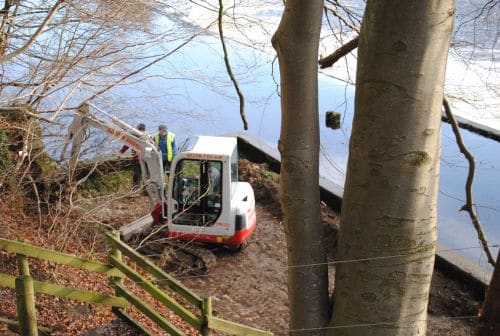
Construction has started today
Workers are on site today, starting to build the retaining wall that will stop the flooding river undercutting the bank. This is part of the work funded by our Defra grant for environmental improvements, that also include building a fish pass and adding fish screens.
Alan our construction engineer has been wading out into the river finishing his measurements for the outflow of the hydro. -
Community energy: our village’s fight for a hydropower scheme
If community energy schemes are part of the government’s energy masterplan, why are there so many planning obstacles? Alison Cahn shares her frustrations with the current system.
Originally published in the Guardian on 14th February 2013Politicians of all hues love talking about community, urging people to get involved in planning, building and providing services for people in their area. But do they really know the cost to those involved? Do they realise the time, energy and expertise needed to jump through the many hoops involved to get a community scheme off the ground? Judging by my experience, I can only assume not.
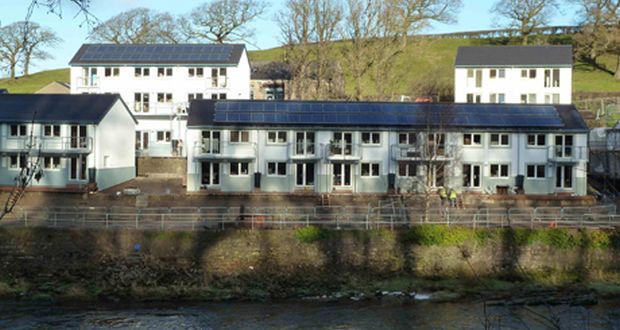
I’ve just moved into one of the North’s newest experiments in communal living; a pioneering eco-cohousing project just outside Lancaster, created and run by the people who live there. So I know how difficult it is to bring community schemes to fruition, and how government agencies, far from helping community projects thrive, can frustrate them.
It took more than eight years to get from a good idea to the point we’re at now, where the 41 eco-homes are (almost) completed. Why? Well, doing anything outside the norm is difficult. Banks, planners, lawyers, utility companies, all those whose co-operation you need to make something happen, are often uncomprehending or even suspicious. The (mostly) volunteers running community projects are doing this in their spare time, often juggling jobs and children, and they are usually first-timers, learning the ropes as they try to navigate bureaucratic systems that are not designed with them in mind.
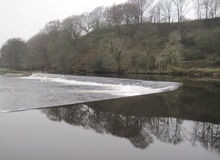 The weir for the Halton Lune Hydro project.
After the blood, sweat and tears put into the cohousing scheme, our community is seeing it happen again with a community energyproject: Halton Lune Hydro, an attempt to install a small hydro scheme on a weir. Our cohousing community is involved because the cable carrying the electricity will cross our land, and the energy generated will feed into our micro grid. It’s a brilliant scheme – not only will it generate enough electricity to power up to 300 homes, but also enough income to fund numerous community projects, and provide environmental improvements to an important salmon river (using £300,000 of European grant funding).
With that grant and projected annual earnings of £156,000 from electricity sales and feed-in tariffs (Fits), the project cost of £922,000 should be paid off within eight years, leaving the annual income available to benefit the community. A proposed second turbine, separately financed, would increase that income to £230,000 a year. What a boon in an era of spending cuts.
But getting the permits needed from the Environment Agency (EA) has proved a nightmare. It’s not that Halton Lune Hydro expects to be given an easy time: they may be volunteers, but they have impressive credentials, including a chartered engineer, John Blowes, as project manager. What drives them crazy are the ever-changing goalposts and different parts of the EA not talking to one another. Repeatedly, when John and his colleagues meet EA officials, they think they have reached an agreement, only to discover more information is wanted, or something else must be done. They have even been asked – twice – to withdraw their application and resubmit it to give the EA more time to consider it.
Just before Christmas, when the second request to withdraw came in after three years of work on the project, John and the others running Halton Lune Hydro lost patience and made a formal complaint to the EA. The delays don’t just mean more work, but also, ironically, jeopardise the enviromental improvements linked to the scheme, as the European grant imposes deadlines to spend the money. John likens developing a community energy scheme to playing a game of 3D chess.
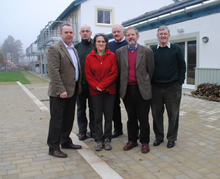 The Environment Agency team visits the Lancaster Cohousing project.
Things progressed swiftly however when Steve Moore, the EA’s director in the north-west, got involved. After visiting the hydro and cohousing site (he was well impressed) he reassured John there wasn’t an anti-hydro element in his agency and the figures bear that out: of the 217 applications for permits in England and Wales since 2009, only nine have been rejected – and none of these were in the north-west.
However, most of these schemes will have been commercial, not community, projects. Barely a dozen community energy share offers have been launched in the past year – and these include wind and solar as well as hydro.
Moore told me the EA struggles to commit the time necessary to help ease community applicants through its complex processes. During his visit he said “official bodies like ourselves need to keep thinking about how we can continually simplify our systems to enable more of this to happen”.
“Community energy” – small-scale renewable energy schemes developed and (sometimes) financed at a local level to supply local need – is politically in vogue. Ed Davey, the energy and climate change minister, has called for a “community energy revolution”. So, surely the government’s energy bill, currently making its way through parliament, will kickstart this revolution?
Not as it currently stands. My partner, Kevin Frea, who has developed two community solar projects and is setting up a community energy network, tells me that the proposals introduce more complexity and so favour the big six energy generators over smaller community schemes.
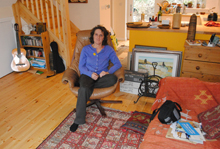 Alison Cahn relaxes at Lancaster Cohousing – eight years after the project’s beginnings.
Anyway, legislation is only part of the answer. What is really needed is a radical rethink in the way the state interacts with those who want to get community schemes going. Because at present these projects are unbelievably difficult to pull off, demanding vast persistence and patience from the volunteers involved.
So what could the government do that would make a difference? One thing would be to create a new breed of official whose role is to help groups through the process; people who understand that volunteers in community schemes, unlike commercial operators, have to take time off from their real jobs to come to a daytime meeting; people with status, who can work between agencies and who can get answers to questions. Then maybe the revolution has a chance.
Alison Cahn is a journalist, film-maker and communications specialist living in Lancaster Cohousing